
I thought my cutting board was clean. Then a Japanese chef picked it up, held it to the light, and asked me one question I could not answer.
A private chef came to cook in a grandmother’s kitchen and quietly brought his own cutting board. What he showed her that night sent her down a two week research rabbit hole, and changed how she cooks for her grandchildren.
I have been cooking for my family for more than thirty years, and if you asked me a year ago whether I was careful about what we eat, I would have told you yes without a second of hesitation.
Most Saturdays start at the farmers market. I cook from scratch nearly every night, real food, fresh vegetables, meat from the butcher who knows my name, almost nothing that comes out of a box. Sunday dinners at our house mean the kids, the grandkids, and a table that runs out of room. I used to say, with a certain amount of quiet pride, that my family ate better than most.
So when our thirty fifth anniversary came around this spring, our children pooled their money and gave us something we never would have booked for ourselves. A private Japanese dinner, cooked by an actual chef, in our own kitchen.
Chef Hiro showed up on a Saturday evening carrying a knife roll that I am fairly sure was worth more than our car. But it was not the knives that caught my attention. Tucked in alongside them, wrapped in cloth, he had brought his own cutting board.
I laughed and told him he really did not need to pack one, that we owned cutting boards like normal people. He smiled, said something polite, and kept unpacking. Later, while he was breaking down a piece of fish, I asked him about it again.
He did not answer right away. Instead he reached over, picked up my board, the white plastic one I had been using for maybe eighteen months, and lifted it up under the light over the island.

Chef Hiro, in my kitchen
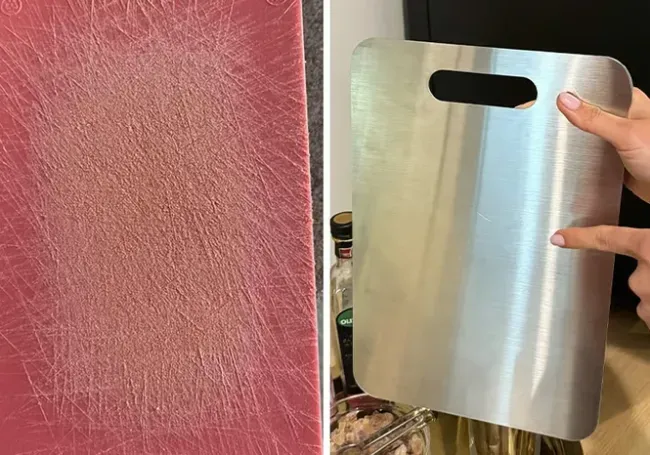
“Do you see all these scratches?” he asked, running his thumb slowly across the grooves. There were hundreds of them, crossing each other in every direction. “That is plastic. Your knife shaved it off the board. So where do you think it went?”
I stood there with a dish towel in my hand and did not have an answer.
“It went into the food,” he said, and set it back down on the counter without any drama at all. “I stopped cutting on plastic years ago. Most of the chefs I trained with did too.”

I laughed it off in the moment. I have been cooking since before that young man was born, and there is a part of you that bristles at being corrected in your own kitchen. But that night, after the dishes were done and everyone had gone home, I could not let it go. I got my tablet, sat down at the same counter, and started reading.
Ten minutes later I found a study that made my stomach turn over.
Researchers estimate a person can ingest tens of grams of plastic a year from a cutting board alone
Not a lifetime. A year.
The research that stopped me cold was published in Environmental Science & Technology, which is not a wellness blog or a supplement company newsletter but one of the most rigorous peer reviewed journals in its field. A team at North Dakota State University set out to answer a question almost nobody had thought to ask: when you chop food on a plastic board, where do the shavings go?
They measured it. A single chopping session releases somewhere between 1,536 and 7,680 microplastic particles directly into whatever you are cutting. Extended across a year of ordinary home cooking, their estimates ran as high as 79.4 million particles, which for a polypropylene board worked out to roughly fifty grams of plastic per person, per year.
Fifty grams. The weight of about ten credit cards. Ground invisibly into food, one slice at a time, by the very knife I was so proud of keeping sharp.
If you have not run into the term before, microplastics are simply plastic fragments smaller than 5 mm across. They are not added to anything on purpose. They form when plastic wears down under mechanical force, which is a technical way of describing exactly what a chef’s knife does to a cutting board a few thousand times a week. And they are small enough that once they are in your food, they are in you.
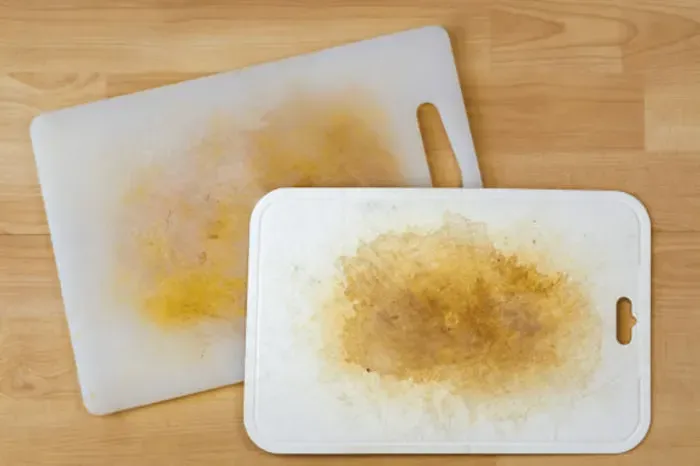
I put the tablet down and went and picked up my board again. I ran my finger across the surface in the dark kitchen. Deep grooves. Scratches in every direction. Faint pink stains from beets that no amount of scrubbing had ever lifted. Every single one of those marks was a place where plastic had been removed from the board, and the only place it could have gone was onto a plate.
I threw it out that night. Then I spent the next two weeks reading everything I could find, and by the end of it I was looking at my entire kitchen differently.
Then I found the 2025 study, and it got worse
The North Dakota research told us how much plastic was coming off the board. What it could not tell us was what that plastic does once it is inside a body.
In 2025 a team at Nanjing University published a follow up in Environmental Health Perspectives that started to answer that. They fed mice food prepared on plastic cutting boards for twelve weeks, then looked at what had changed.
The mice showed measurable shifts in their gut bacteria, changes in liver function markers, and signs of intestinal inflammation. The authors were careful, as good researchers are, and their conclusion was measured rather than alarmist. But it was still the sentence I keep coming back to: there is no plastic cutting board that can currently be described as fully safe.
I want to be honest about what this research does and does not show, because I got tired very quickly of health articles that overpromise. These were mice, not people. Twelve weeks of controlled feeding is not thirty years of Sunday dinners. Nobody has proven that the plastic coming off your board is making you sick, and anyone who tells you otherwise is selling something harder than I am.
But here is where I landed after two weeks of reading. Nobody has demonstrated that it is harmless either. The particles are real, the quantities are not small, and the direction the evidence keeps pointing is not a reassuring one. When it comes to what I put in front of my grandchildren, I do not need proof of harm to decide I would rather not. I just need to know there is a better option and that it is not difficult to switch.
That was the part I did not have yet.
Wood, bamboo, glass: I looked at all of them, and none of them worked
My first instinct was the obvious one. Go buy a nice heavy wooden board like my mother had and be done with it.
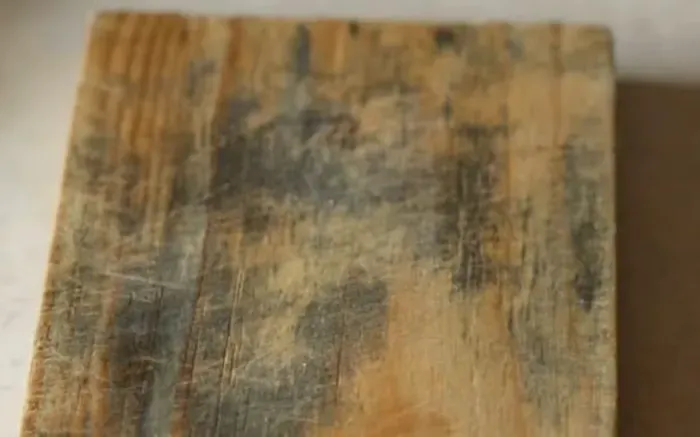
Then I actually read about wood, and the picture got complicated fast. Wood is porous, which is the whole reason it feels warm and forgiving under a knife, but it is also the reason moisture, juice and bacteria seep down into the grain where no amount of surface washing reaches them. The knife grooves that make an old board look so handsome are the same grooves that give salmonella and E. coli somewhere to sit. And a wooden board is a maintenance project. Oil it regularly or it warps, cracks and eventually grows mildew. I did not particularly want to spend my evenings rubbing mineral oil into a heavy block of maple.
Bamboo, which everyone recommends as the eco friendly upgrade, has the same porosity problem plus one of its own. Bamboo boards are not carved from a single piece. They are strips laminated together with adhesive, and depending on where the board was made, that adhesive may be formaldehyde based.
Glass I ruled out in about four minutes. It is slippery in a way that genuinely frightens me, the knife skates instead of biting, and the noise is unbearable. Worse, glass destroys edges. Every cut dulls the blade a little more, and a dull blade means you push harder, which means less control, which is how people cut themselves. I had already learned this the expensive way during what my husband still calls my experimentation phase.
Stainless steel was the same story in a different finish. Hygienic, certainly, but hard on knives, slippery, and loud enough to wake someone upstairs.
Cutting board materials — the problems
Plastic (PE/PP)
Releases up to 50g of microplastic per year
Wood / Bamboo
Traps bacteria and mildew, needs regular oiling
Glass / Ceramic
Destroys knife blades fast
Stainless Steel
Dulls knives, slippery, noisy
So there I was. I had thrown out the plastic board on principle and now there was nothing on the shelf I actually felt good about. I drove to the home goods store, stood in the cutting board aisle for twenty minutes with my reading glasses on and my phone in my hand, and looked up every single material in front of me. Nothing changed my mind.
And then, standing right there between the butcher blocks and the plastic multipacks, I remembered Hiro’s board.
Metal. But not steel, because it had been far too light for that. A soft matte finish, almost warm looking, with no shine to it. I went home, found the booking page we had hired him through, and sent him a message feeling slightly ridiculous about it. What was that cutting board you brought to our anniversary dinner?
His reply came the next morning. “It is titanium. I do not cut on anything else.”
Titanium. My first thought was that titanium is for aircraft and hip replacements, not for chopping onions on a Tuesday.
But Hiro explained, and then I went and confirmed it myself, that titanium is one of the most genuinely inert materials we have found. It is used for surgical implants precisely because the human body does not react to it. It is certified for food contact. And it happens to have a combination of properties that makes it almost unfairly well suited to a cutting board, which is why, he said, a lot of the chefs he trained with in Japan had quietly moved over to it years ago.
The more I read the more I wondered how I had never heard of this.
Titanium is completely non porous. There is no grain, no texture, no structure for bacteria or moisture or fish smell to work its way into. There is nothing to seep into, so nothing seeps in. You rinse it, you wipe it, and the surface is genuinely clean rather than clean looking.
There are no microplastics, and this is not a matter of degree. It is a pure metal. There is no plastic present to release. Whatever your knife does to the surface, and in practice it does very little, it cannot shave off something that was never there.
It is gentle on knives, which honestly surprised me more than anything else. I had assumed any metal surface would behave like glass or steel and wreck an edge. Titanium does not. It is hard enough to resist scoring but it lacks the abrasive grit that eats away at a blade, so knives hold their edge dramatically longer than they do on ceramic or glass.
There is also a reasonable body of research on titanium dioxide, the thin oxide layer that forms naturally on the surface of any titanium object the moment it meets air, and how it acts against bacteria. Work published in Scientific Reports and elsewhere has documented antibacterial activity against common foodborne organisms including E. coli and Staphylococcus aureus. I will not oversell this, because most of that research looks at engineered nanoparticle surfaces under laboratory conditions rather than a cutting board on a kitchen counter. But combined with a surface that has nowhere for anything to hide in the first place, it is not nothing.
I sat there with my coffee thinking that I had been buying and throwing away plastic boards for three decades, and it took a chef walking into my kitchen with his own to find out there was an alternative.
The name that kept coming up
Finding an actual titanium cutting board that was well made and not priced like a piece of laboratory equipment took more effort than I expected. A lot of what I turned up was either industrial titanium plate with sharp edges and no thought given to a home kitchen, or cheap imports that were titanium coated at best and mystery metal at worst.
But one name kept surfacing. In cookware forums, in review threads, and in two different Facebook cooking groups I lurk in: Katori.
Katori makes a solid titanium board designed from the start for home cooks rather than adapted from industrial stock. It carries more than 1,800 verified reviews averaging 4.7 stars, and the feedback runs overwhelmingly positive, including from people who clearly went in unconvinced.
Before I ordered I did the thing I am slightly embarrassed about and sent the link to Chef Hiro to check. His reply was three words. That is the one.
No plastic. No pores for bacteria. No dulled knives, no staining, no smells. A thirty day money back guarantee, which mattered to me, because at that point I had bought enough disappointing cutting boards to want an exit.
I ordered that night. It arrived in about a week.
The first week
The first thing I noticed when I unboxed it was the weight, or rather the lack of it. I had braced myself for something like a steel plate and instead it was light enough to lift and move with one hand. Anyone who has wrestled a soaked wooden board into a sink will understand why that matters more than it sounds like it should.
It is double sided, which solved a problem I had been managing badly for years. One side for raw meat, the other for everything else. No cross contamination, no juggling three boards during dinner prep.
The first thing I cooked on it was a stir fry, because it seemed like a fair test. Peppers, scallions, garlic, a knob of ginger. The knife moved beautifully. None of the tackiness you get on plastic where the blade grabs, none of the horrible skating and clacking of glass. Just clean, quiet, controlled cuts.
Cleanup was the part that genuinely converted me. I held it under running water, wiped it, and it was done. No grooves to dig into. No garlic smell hanging around until Wednesday. No yellow stain from the ginger.
Three months in, and here is my honest report
I have used Katori every single day for three months, so I can tell you what has held up and what I actually noticed.
My knives are sharper. I used to run my chef’s knife across the sharpener every few weeks because I could feel it going. I have not touched a sharpener since I made the switch. If you own knives you care about, that alone changes the arithmetic on the price.
There are no smells. None. I cook with a lot of garlic and onion, I make fish at least once a week, and my old boards held those smells for days no matter what I did. This one rinses neutral every single time.
It still looks new. Not a scratch, not a stain, not a mark. After three months of daily use it is visually identical to the day it came out of the box, which after a lifetime of watching boards get uglier by the month is faintly disorienting.
And I will be honest about the small things too, because I would want someone to be honest with me. It is lighter than you expect, and the first time I used it in a hurry it slid on the counter. A damp kitchen towel underneath fixed that permanently and I have not thought about it since. It also does not have the warm forgiving feel of a good wooden board under the knife, which some people love. I got used to it inside a week.
The thing that matters most is harder to put a number on. I no longer stand at the counter chopping vegetables for my grandchildren and wonder what else is going into the bowl. I know exactly what their food is touching. An inert metal that does not flake, does not leach, and does not break down.
What other buyers have said:
“Complete game changer. I have tried every board on the market and this is the first one that does not force a trade off somewhere. Hygienic, kind to my knives, and it looks good enough to leave out on the counter.”
Lisa P. 
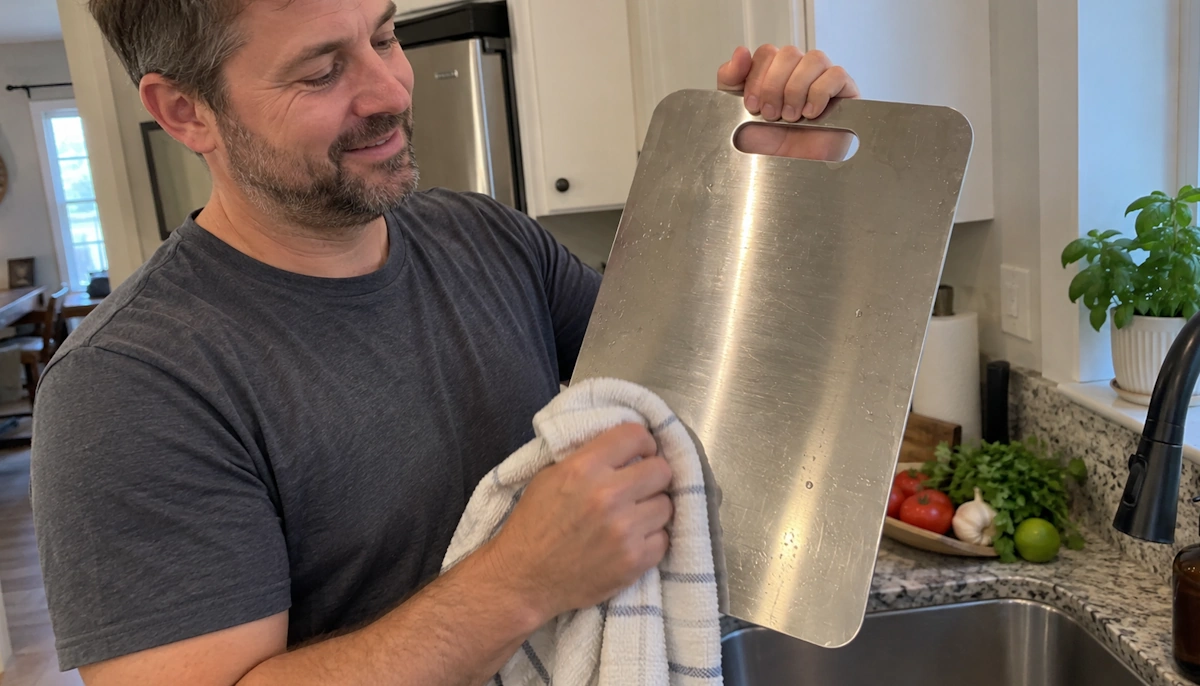
“I assumed this was another social media scam and half expected to be disputing the charge. Two months later I am using it every day. Rinse it, dry it, done. Only thing I would change is a slightly bigger hole in the handle.”
John L.
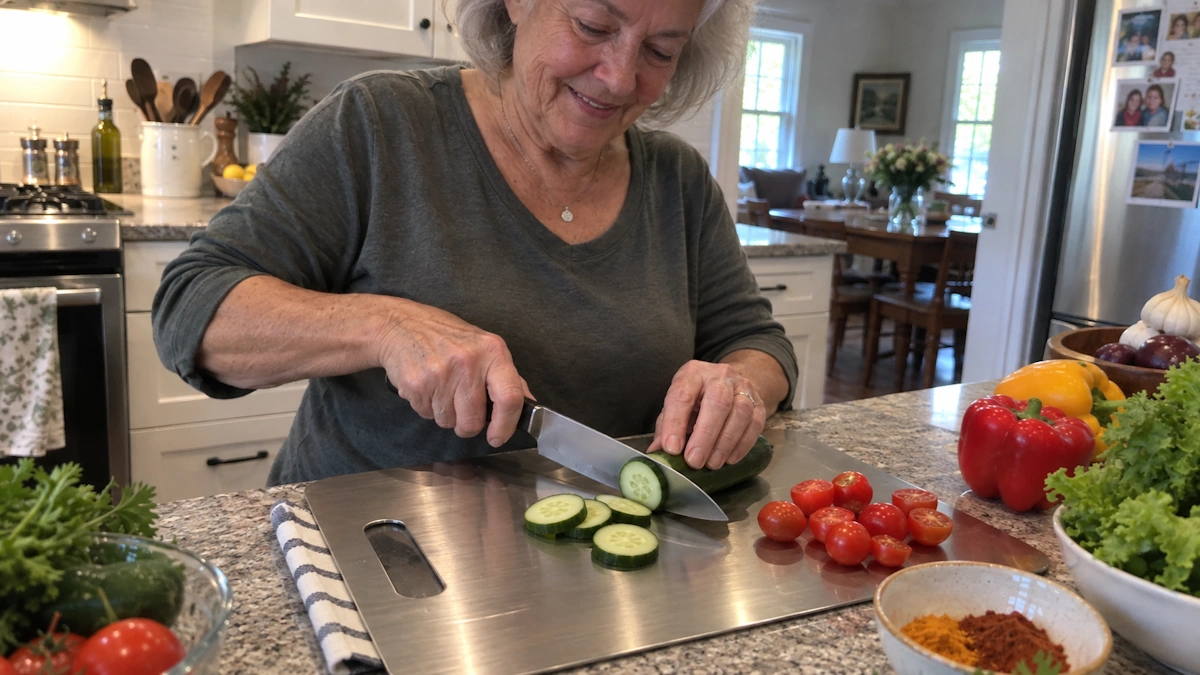
“I am 67 and I rolled my eyes when I first saw a titanium cutting board, it sounded like an excuse to charge more. Then I read what plastic actually does. Six weeks in there is not a mark on it. It is lighter than I expected and slid the first time, but a tea towel underneath sorted that out.”
Margaret C.
Katori vs. Everyone Else
Plastic Board
Wood / Bamboo
★ Recommended
Katori (Titanium)
Microplastics in food
✗ ~50g per year
✓ None
✓ Zero — pure metal
Bacteria & mildew
✗ Hide in scratches
✗ Seep into grain
✓ Pore-free, just wipe
Smells & stains
✗ Picks up garlic & beets
✗ Absorbs everything
✓ Nothing sticks
Maintenance
✓ None
✗ Must oil monthly
✓ Rinse & done
Lifespan
✗ Replace yearly
✗ Warps & cracks
✓ Lifetime
Upfront cost
✓ Cheap, but replaced yearly
✗ Mid-range, plus oiling
✓ 50% off · up to 75% off on bundles
Let us talk about the price, because it is the obvious objection
I am not going to pretend this costs the same as the plastic board at the supermarket. It does not.
But I did the arithmetic on my own thirty years and it changed how the number looked. I have replaced a plastic board roughly once a year for three decades. Call it thirty boards, some cheap, some not so cheap. Add the sharpening bills from the period when I was cutting on glass and did not understand what I was doing to my knives. All in, I have spent a genuinely uncomfortable amount on cutting boards and the consequences of cutting boards, and I have nothing to show for any of it except a pile of scratched plastic and a lot of plastic that went somewhere else.
A titanium board does not wear out. There is no replacement cycle, no oiling, no warping, no annual trip to the kitchen aisle. You buy it once. Looked at across even five years, never mind thirty, it is the cheapest board I have ever owned by a wide margin.
There is also a thirty day money back guarantee, which is what made the decision easy for me. If it had not lived up to any of this, I would have sent it back and written a very different article.
Update: There is a promotion running at the moment that takes a single Katori board down by 50%. Multi-unit bundles push the saving further again, up to 75% off — the more units you take, the deeper the per-unit discount goes. The promotional pricing is time limited and stock on the bundles moves faster than on singles, so if you are going to do it, do it while the discount is live.
The questions people keep asking me
In three months on quartz, mine has not left a mark. If you are nervous, the same kitchen towel that stops it sliding also settles that question entirely.
It is quieter than glass by a wide margin and comparable to a heavy plastic board. It has a low solid sound rather than a high sharp one.
Yes. Although I have honestly stopped bothering, because rinsing it takes less time than loading it.
Shipping has been running about a week in my experience and in most of the reviews I have read, occasionally a day or two longer.
The thirty day guarantee covers you. Send it back within 30 days for a full refund.
So what are you going to do?
I understand that a cutting board is not the most exciting thing you will read about today. It is not a new oven or a trip somewhere warm. It is a flat thing you put on a counter.
But when I think about the fact that the board I used for eighteen months was quietly shedding plastic into every meal I made on it, and that I served those meals to my grandchildren while feeling good about how carefully I cooked, it stops being a boring purchase very quickly.
You can carry on with what you have. Replace the plastic every year and try not to look too closely at the scratches. Keep scrubbing at wood grooves that never come properly clean and telling yourself it is fine because it is natural.
Or you can make one switch, one time, and stop thinking about it.
If you do, order from the official Katori website rather than anywhere else. That is where mine came from, and it matters more than it sounds like it should — the reason a proper titanium board was so hard to find in the first place was all the coated imitations sitting in the way. It is also where the current promotion is: 50% off a single board, and up to 75% off when you take one of the larger multi-unit bundles.
For me it was the easiest decision I have made about my kitchen in years. And the next time Chef Hiro comes to cook here, there is one thing he can leave at home.
SOURCES:
[1] Study estimating microplastic release from plastic cutting boards during normal chopping:
Yadav, H., Okoffo, E.D., et al. (2023). “Cutting Boards: An Overlooked Source of Microplastics in Human Food?” Environmental Science & Technology
[2] Animal study on simulated cutting-board microplastic exposure:
Gan, L., et al. (2025). “Simulated Microplastic Release from Cutting Boards and Evaluation of Intestinal Inflammation and Gut Microbiota in Mice.” Environmental Health Perspectives, 133(3–4)
[3] Laboratory study on titanium dioxide and zinc oxide nanoparticles:
Azizi-Lalabadi, M., et al. (2019). “Antimicrobial activity of Titanium dioxide and Zinc oxide nanoparticles.” Scientific Reports
[4] In vitro study on a nanostructured titanium alloy surface:
Bright, R., et al. (2021). “Long-term antibacterial properties of a nanostructured titanium alloy surface: An in vitro study.” Materials Today Bio, 13, 100176
[5] Review of nano-titanium dioxide in food packaging materials:
Li, J., Zhang, D., Hou, C. (2025). “Application of Nano-Titanium Dioxide in Food Antibacterial Packaging Materials.” Bioengineering, 12(1), 19
IMPRINT (IMPRESSUM):
Company Name: Movira LLC
Company Address: 16192 Coastal Highway, Lewes, Delaware 19958, USA
Company registration number: 10631190
VAT number: Not applicable – company registered outside the EU
Company representative: Tomas Jasnauskas
Phone: +1 (910) 981-1790
Email: [email protected]
HEALTH DISCLAIMER: Katori is a kitchen utensil, not a medical device. It is not intended to diagnose, treat, cure, or prevent any disease or health condition. References to microplastics or related research describe general scientific literature about cutting board materials and are not a claim that using this product will produce any health outcome. If you have concerns about food safety, diet, or your health, consult a qualified healthcare professional.
PRODUCT DISCLAIMER: Individual experiences may vary. Statements about durability, knife friendliness, resistance to smells, staining and ease of cleaning describe normal domestic use and typical customer feedback, and are not guaranteed outcomes. Product appearance, dimensions and availability may vary by batch and by region.
USE AND CARE DISCLAIMER: For food preparation use by adults. Keep out of reach of children. Use on a stable, level surface; place a damp cloth underneath if the board slides. Handle sharp knives with care and keep fingers clear of the blade. Rinse after use and dry before storing. Discontinue use if the board becomes damaged, deformed, or develops sharp edges. Follow any care instructions supplied with the product.
ADVERTISEMENT DISCLAIMER: This website is an advertisement and not a news publication, scientific journal, or independent product review. Any personal stories, testimonials, or photographs are used for advertising and illustrative purposes and may feature models. Results shown or described are not guarantees, and individual results may vary.
MARKETING DISCLAIMER: Please note that the operator of this website may have a financial relationship with the products and services advertised. The operator may receive compensation when a qualified lead, click, or purchase is generated.
RETURN ADDRESS:
Movira LLC
16192 Coastal Highway, Lewes, Delaware 19958, USA
Please contact [email protected] before sending any return, so that the correct return address and instructions for your region can be confirmed.
14-DAY RIGHT OF WITHDRAWAL FOR EU CONSUMERS
If you are a consumer located in the European Union, you generally have the right to withdraw from an online purchase within 14 calendar days from the day you, or a third party appointed by you, receives the goods. You do not need to provide a reason for withdrawal.
To exercise your right of withdrawal, you must inform the seller of your decision to withdraw from the contract within the 14-day withdrawal period. The product should be returned to the return address confirmed by the seller, unless the seller provides a different return address or return instruction.
Returned products should be sent back without undue delay and no later than 14 days from the day on which you communicate your withdrawal. The consumer may be responsible for the direct cost of returning the goods unless otherwise stated by the seller.
Refunds are generally processed after the seller receives the returned goods or after the consumer provides proof of return shipment, whichever occurs first. Refunds may be made using the same payment method used for the original transaction unless another method is agreed.
You may handle and inspect the product as you would in a shop. You may be liable for any diminished value of the goods resulting from handling beyond what is necessary to establish their nature, characteristics and functioning. This does not affect your statutory rights for faulty, damaged, or incorrectly supplied products.
© 2026 All Rights Reserved